Showing posts with label paper dying. Show all posts

Monday, October 7, 2013

Hand dyed paper with chalk pastel solar systems - grade 6


In grade six, we are currently learning about the solar system. Doing science integrated art lessons is so much fun, and I especially enjoy doing projects with outer space themes (see here and  here.)

A while back I learned a great technique for dying paper with chalk pastels, which I have used for my silhouette project, as well as the following year for my spooky silhouettes. I've only ever tried it on white paper, but thought that if it would work on black cardstock, it could make the perfect background for an outer space portrait. Luckily, it worked so well!

I've outlined the steps to dying the paper again, as there are a few things I've learned since the first time I posted about it.

Here's what you need to know to hand dye paper (definitely works with white paper, and black cardstock)

Step 1: Fill a basin with water, about 2 inches deep. Using a pair of scissors (adult) or a popsicle stick (student) scrape off shavings from a piece of chalk, or a piece of chalk pastel, into the basin. 

Note: When I first began doing this project, I would let students shave the chalk themselves. Just for times sake, though, I have started doing this process with them. They come sit with me and tell me what colors to do in what order, and I scrape it into the basin. It speeds everything up so much!

Step 2: Keep going until your water is VERY speckly on top of the water. Make sure that you don't agitate the basin, or all of the flecks will sink to the bottom.

Step 3. Submerge your paper facedown into the basin, for about 5-7 seconds. Make sure to lightly tap all around the paper so that it covers all parts of the paper. Quickly lift your paper up in one motion, and lay it face up to dry (I put them on placemats to dry, as they're soaked!)

Step 4: If you have any white spots left, scrape some more chalk onto the blank spots to cover them up. The paper should dry quickly (in our case, within about 30 minutes.) 

While the paper was drying, students drew their planets onto white paper, and colored them using a combination of chalk and chalk pastels. We did a lesson on identifying the light source, and talked about how shading could make the planets look three dimensional. I let them invent their own planets, so they didn't have to worry about accuracy of shapes and colors.

Once their paper was dry, they glued their planets on, making sure that the light source always came from the same place. They were able to finish this in 2 fifty minute periods.


I hope I accurately portrayed how beautiful these are! Taking pictures of black background is never easy, especially since my camera made these come out a little bit chalkier than they are in person. They're so pretty!

Monday, September 2, 2013

Antique treasure maps - grades 4-8

Ok I am being worse than usual at updating! Summer has just been toooo appealing - we've been working like crazy on the house, and I have been busily getting ready to teach a new grade, in a new division, at a new school!

This is probably my favorite project that we did during my Summer art camp. I actually just came up with it while we were at the park one day, as the kids were playing in the sand, digging and hiding treasure. I asked if they wanted to try drawing treasure maps, and they were all really excited!


To create the maps, I first had my students research antique treasure maps. They looked at a variety of compasses, and decided on the style they wanted. They sectioned out islands, which they outlined using Sharpie, and then colored the edges using pencil to make them stand out more. The next step was details - students used thin Sharpie to add mountains, trees, monsters, pretty much anything they wanted! When everyone was finished, we used brown liquid watercolor to dye the paper brown. The next day, my camp volunteers helped to burn the edges of the paper, giving them an aged look.


They were soo proud of these, and I don't blame them - I LOVE them!!

This last one was done by a student of mine that is just such a talented artist. She had to leave before we got around to burning the edges, but the finished product is still beautiful. I'd hang this on my wall!

 Tomorrow is my first day at my new school - wish me luck!!

Thursday, July 11, 2013

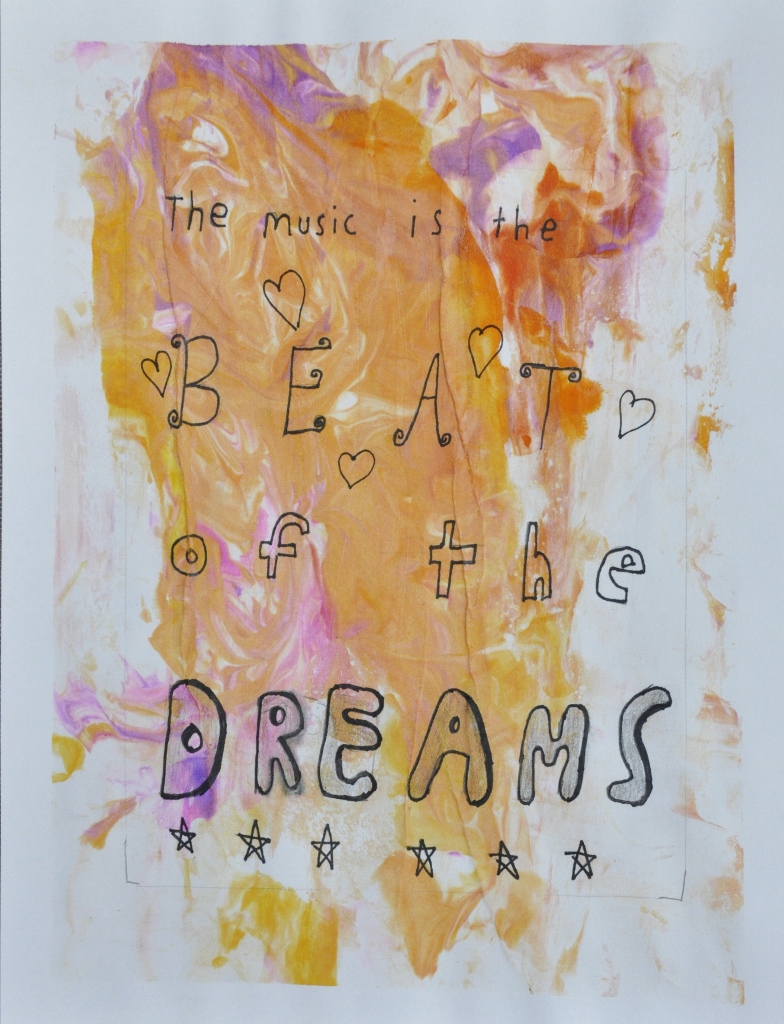
Another art camp goodie - hand lettered quotes!

Hand lettering is one of my favorite things to do. As someone that can't really draw, it's always been something that I am able to fine tune and feel a moderate amount of success with. I decided to try a hand lettering project with students for the first time today, and I will definitely be doing it again!

The first thing we did was look at hand lettered quotes on google. We studied them, and talked about the features (most of them are written into a square shape, and feature different styles of text for teach line.) We also talked about how certain words were larger, implying that they're a more important part of the quote.

Campers then chose their own quotes, and did a rough draft into a square shape. When they were confident with their writing, they lightly traced the squares onto good paper, and copied down their quote. Using a fine Sharpie, they hand lettered using a variety of styles of writing.

The last magic part of the equation was hand dying the paper using the ol' shaving cream and liquid watercolor technique (do you know this one? If not, I will post a tutorial.) Since we had taped the papers down to our placemats using painters tape,  the shaving cream went around the tape, leaving  a beautiful crisp, white border when they were done. Many kids voted this their favorite project so far!


Thursday, March 8, 2012

Hand dyed paper with silhouettes - grade 5/6

 
Well, here it is. I present to you my absolute favorite art project ever for junior grade students. I saw the idea just yesterday morning here, and decided that I must do it immediately. Luckily, my students had earned a privilege day (where they got to do fun activities!) so we decided to spend the day doing... ART!

Last night, I asked students to do a google search and find some ideas for silhouettes that they would like to do. We talked about what would make a good silhouette – animals, nature, etc., and we talked about how their choice in colors would change the mood of their picture. Students had to decide what colors they would use to dye their paper. 

 
Here’s a simplified explanation of the instructions. In a shallow basin of water, students use a popsicle stick to scrape away at pieces of chalk pastel. I tried normal chalk, but found that chalk pastels gave richer color. They must shave colors into the basin until a layer of color forms on top, where almost no water is visible. Then, they lay the paper flat on top of the water for about 5 seconds, and carefully remove it. The paper will definitely start to curl, so they should have somewhere that they can put it down on quickly (we used placemats.) anywhere where the color didn’t take properly, students shaved some extra chalk shavings onto it, which blended well since the paper was still wet. This afternoon, they drew their silhouette shapes, cut them out, and glued them on!


This project was incredibly easy, and is definitely the best project I’ve done so far this year. The kids loved it, everyone had success, and I just feel like it was a great way to use their earned day.

Only one more day until our one week of March break! I will be going somewhere fun, far, and frozen (well, not that frozen, but the first thing kids think when they hear it is IT’S COLD!) Any guesses?

Friday, February 24, 2012

Ancient scrolls - grade 5/6


Did this project with my grade 5/6 class, as we are currently studying ancient Egypt (grade 5) and Canada's explorers (grade 6.) We did the research and writing yesterday, then spent today making our beautiful scrolls!

First, I'll start with the basics - how we drew the scrolls. I got my wonderful drawing directions here. We used a heavyweight drawing paper so that it wouldn't tear in the water. I demonstrated the following steps on the board:


Next, this is the technique I used to dye 34 scrolls at the same time. 

Then, just add your ancient text and you're finished!


Related Posts Plugin for WordPress, Blogger...